


-2-2.webp)
.webp)


How to Build a Pitch Deck for Investors (Step-by-Step Guide)
Learn how to build a pitch deck that attracts investors. This step-by-step guide explains the slides, structure, and strategy founders use to raise funding.
.png)
Raising capital often starts with one critical asset: the pitch deck.
A pitch deck is the story of your company distilled into a concise presentation that helps investors understand your opportunity quickly. Done well, it can open the door to investor meetings, deeper diligence, and ultimately funding.
This guide explains how founders build investor-ready pitch decks and the slides venture capital firms expect to see.
A pitch deck is a short presentation founders use to introduce their startup to investors.
Its purpose is to communicate the essentials of your company quickly:
• the problem you're solving
• the solution you’ve built
• the size of the opportunity
• the progress you've made
• why your team can win
Most strong pitch decks are between 10 and 15 slides.
The goal is not to explain everything about the business. Instead, it should spark investor curiosity and lead to further conversation.
Although pitch decks vary by company and industry, most successful startup decks follow a similar structure.
Below are the core slides investors expect.
Every strong startup begins with a meaningful problem.
Your problem slide should explain:
• who experiences the problem
• why the problem matters
• why current solutions fall short
The best problem statements are simple and specific.
Investors should immediately understand why solving this problem matters.
After defining the problem, introduce your product.
Explain how your solution solves the issue more effectively than current alternatives.
Focus on:
• simplicity
• clarity
• differentiation
Avoid overwhelming investors with technical details.
Investors want to understand the scale of the opportunity.
This slide describes the Total Addressable Market (TAM).
Key questions to answer:
• How large is the market?
• How quickly is it growing?
• Why is this opportunity emerging now?
Large markets support venture-scale outcomes.
This slide shows what you’ve built.
Common ways to present your product include:
• screenshots
• product walkthroughs
• user experience visuals
The goal is to help investors quickly understand how the product works.
Traction demonstrates that your startup is gaining momentum.
Examples of traction include:
• revenue growth
• user growth
• pilot customers
• partnerships
Evidence of traction reduces perceived risk for investors.
Explain how your company generates revenue.
Common models include:
• subscription software
• transaction fees
• enterprise licensing
• marketplace commissions
Investors want to understand how the business scales financially.
Every startup faces competition.
Your competition slide should show:
• existing competitors
• how your approach differs
• what gives you an advantage
Avoid claiming you have no competition.
Your go-to-market strategy explains how you plan to acquire customers.
Examples include:
• product-led growth
• enterprise sales
• partnerships
• marketing channels
A clear distribution strategy builds investor confidence.
Investors often invest in teams as much as ideas.
This slide highlights:
• founder expertise
• relevant experience
• key team members
Explain why your team is uniquely suited to solve this problem.
Finally, clearly state the funding you're seeking.
Include:
• how much you're raising
• what the funds will be used for
• the milestones this capital enables
Clarity here helps investors understand the opportunity quickly.
Many founders weaken their pitch decks with avoidable mistakes.
Some common issues include:
Too many slides
Strong decks remain concise.
Too much text
Slides should be quick to read and visually clear.
Weak storytelling
Your deck should follow a logical narrative:
Problem → Solution → Opportunity → Traction → Team.
Lack of traction
If traction is early, emphasize learning, validation, and early customer signals.
A well-structured pitch deck helps founders communicate their vision clearly and efficiently.
While no presentation guarantees funding, a compelling narrative combined with early traction dramatically increases the chances of starting productive conversations with investors.
Founders preparing to raise capital often refine their decks multiple times before approaching venture capital firms.
Teams like Venturion Ventures frequently work with startups during this stage to strengthen their narrative, structure investor materials, and prepare for fundraising conversations.


Featured
A practical analysis of the Sequoia pitch deck structure and why it works for venture capital fundraising.



Featured
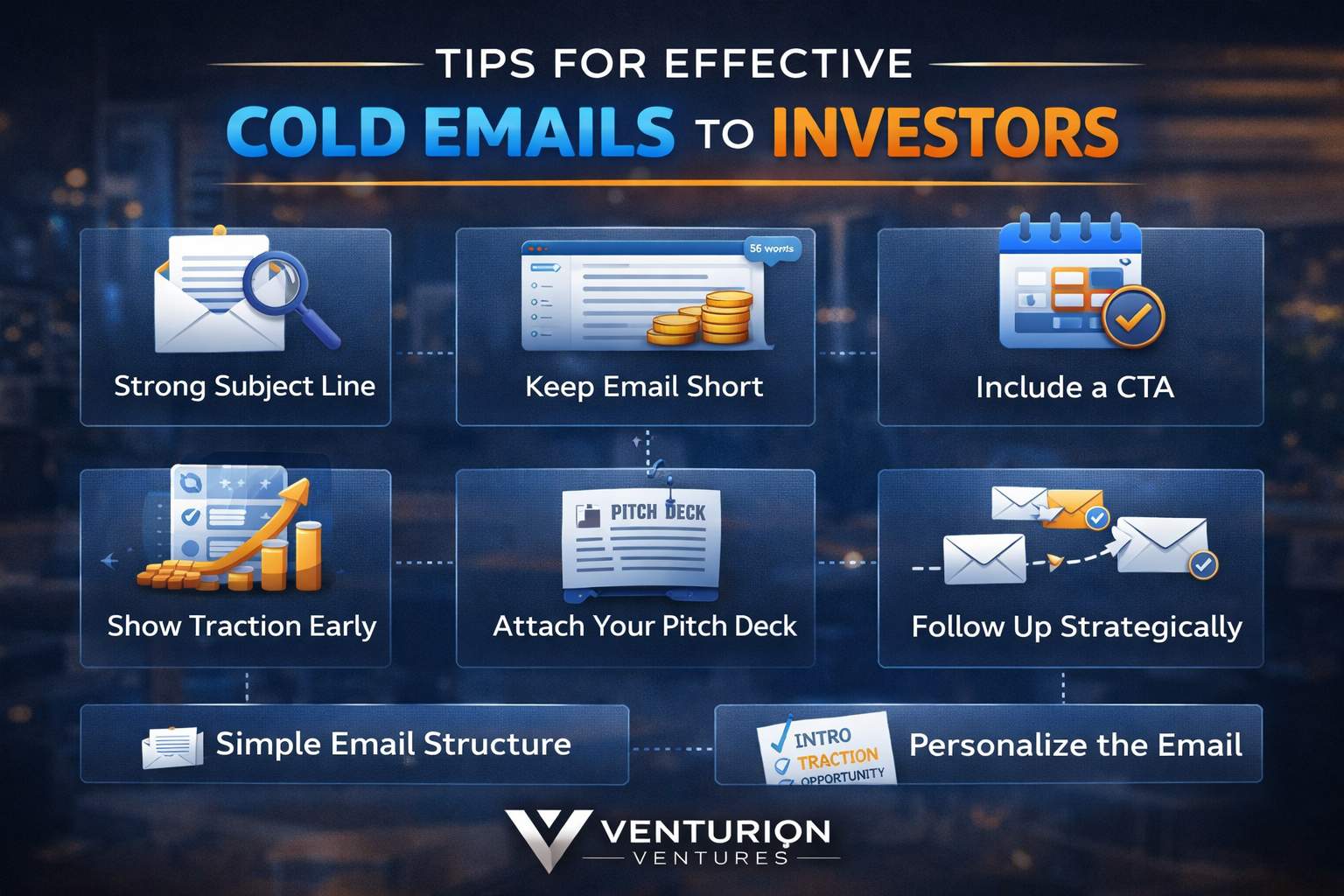
Cold emailing investors can work, but only when done correctly. Here’s how founders can stand out and get responses.


Featured
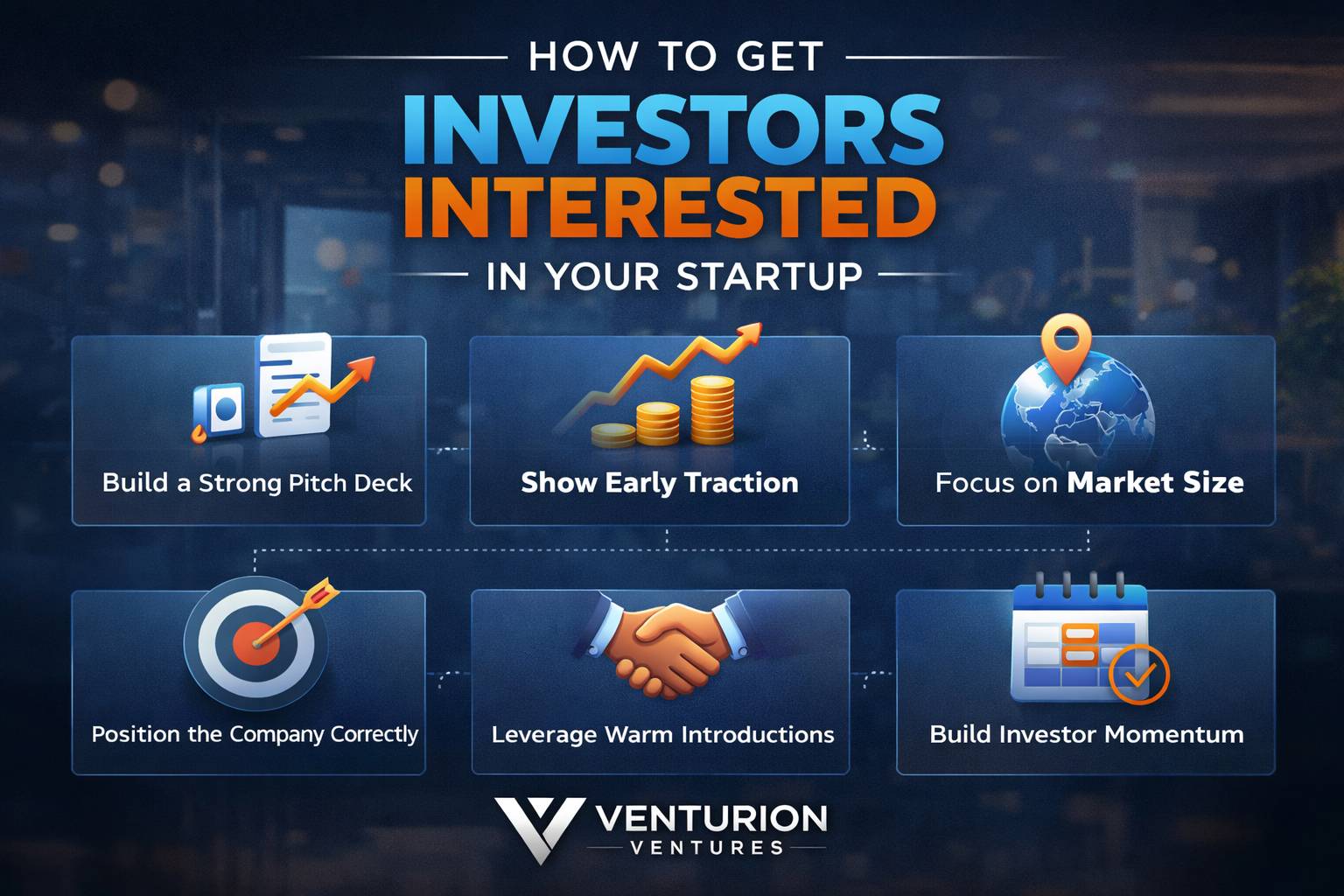
A practical guide explaining how startups can generate investor interest through clear positioning, strong pitch decks, market opportunity, and early traction.

Featured
Not all pitch deck services are the same. Here’s how founders can evaluate providers and choose the right partner for fundraising.

This process can be tough. But don’t worry, we’ve written a little something to help guide you through it. Learn more and take advantage of a limited-time offer with 50% off.
.svg)
Discover Insider VC Secrets

.svg)


