Venture capital (VC) is a financing model vital for fostering high-growth potential in startups and early-stage businesses, involving investors contributing capital in exchange for preferred-equity ownership.
Venture capital (VC) is a financing model vital for fostering high-growth potential in startups and early-stage businesses, involving investors contributing capital in exchange for preferred-equity ownership.
Content:
Stages of Venture Capital Financing
Advantages & Disadvantages of Venture Capital
Venture Capital vs. Angel Investing
Venture Capital vs. Private Equity
Venture capital plays a pivotal role in shaping groundbreaking ideas and fundamental research into transformative products and services that have left an indelible mark on the world. It is instrumental in constructing high-growth enterprises from their inception.
Venture investments yield substantial returns, amounting to billions of dollars for investors and their institutions, fostering the creation of millions of jobs. Numerous companies supported by venture capital have not only expanded significantly, gone public, and achieved widespread recognition but have also been instrumental in generating a myriad of high-skilled employment opportunities and contributing trillions of dollars in economic benefits to the U.S. economy.
Understanding Venture Capital
The process begins with startups pitching to VC firms, which assess and conduct due diligence before investing in return for equity. Venture capitalists often actively engage by offering guidance and support, potentially serving on the board of directors. However, the venture capital landscape is inherently risky, demanding diversified portfolios as a safeguard for overall returns. The typical exit strategies involve:
Acquisitions
Mergers
Initial Public Offerings (IPOs)
Stages of Venture Capital Funding
Pre-seed Capital: Involves initial funding for business launch, often sourced from the founder's personal network.
Startup Capital (Series A): Startups receive funding from venture capitalists, often associated with Series A funding rounds, coinciding with product prototype releases.
Early Stage (Series B): Funds are used for manufacturing and increased marketing.
Expansion Stage (Series C and beyond): Businesses with a solid customer base attract investor interest, with reduced risk compared to earlier stages.
Mezzanine: Involves IPOs or acquisitions, with successful companies prompting investors to sell stock for profit.
Advantages of Venture Capital
Early Financial Support: Provides crucial financing and support for turning ideas into profitable ventures.
Exposure to Resources: Venture capitalists offer valuable managerial, technical resources, and networks, assuming investment risks for potential high returns.
No Obligation to Repay: VC funding typically doesn't demand personal guarantees or collateral, relieving founders of repayment obligations in case of failure.
Disadvantages of Venture Capital
Loss of Equity Control: Founders may relinquish a substantial portion of ownership control.
Time-Consuming: Securing venture capital can be a lengthy process, unsuitable for companies urgently needing funds.
High Expectations: Expectations for rapid growth within a short timeframe can add pressure, and underperforming companies may struggle to secure subsequent funding.
Venture Capital vs. Angel Investing
Venture capital involves pooled funds from various sources, focusing on institutionalized, larger investments, and often comes with a longer commitment.
Angel investors, typically high-net-worth individuals, invest smaller amounts individually, providing mentorship and advice, sometimes without active involvement.
Venture Capital vs. Private Equity
Venture capital supports startups, seeking minority stakes with shorter holding periods.
Private equity targets established businesses, demanding larger ownership percentages and longer holding periods.
Conclusion
While venture capital can be a strategic financing avenue, understanding distinctions with angel investing and private equity is crucial. Businesses often adopt a mix of these funding routes, necessitating comprehensive research and consideration of potential tradeoffs.
By offering insights, assistance in securing seed capital, refining pitch decks, and optimizing business processes, Venturion aligns with the objectives of venture capital enterprises in fostering entrepreneurial excellence.
Venturion is a startup fundraising firm and pitch deck agency providing investor-ready presentations, pitch deck services, and strategic consulting to help founders raise capital and secure investor meetings. We partner with startups from pre-seed through Series A to deliver high-performance pitch decks, investor presentations, and fundraising strategy aligned with venture capital expectations.
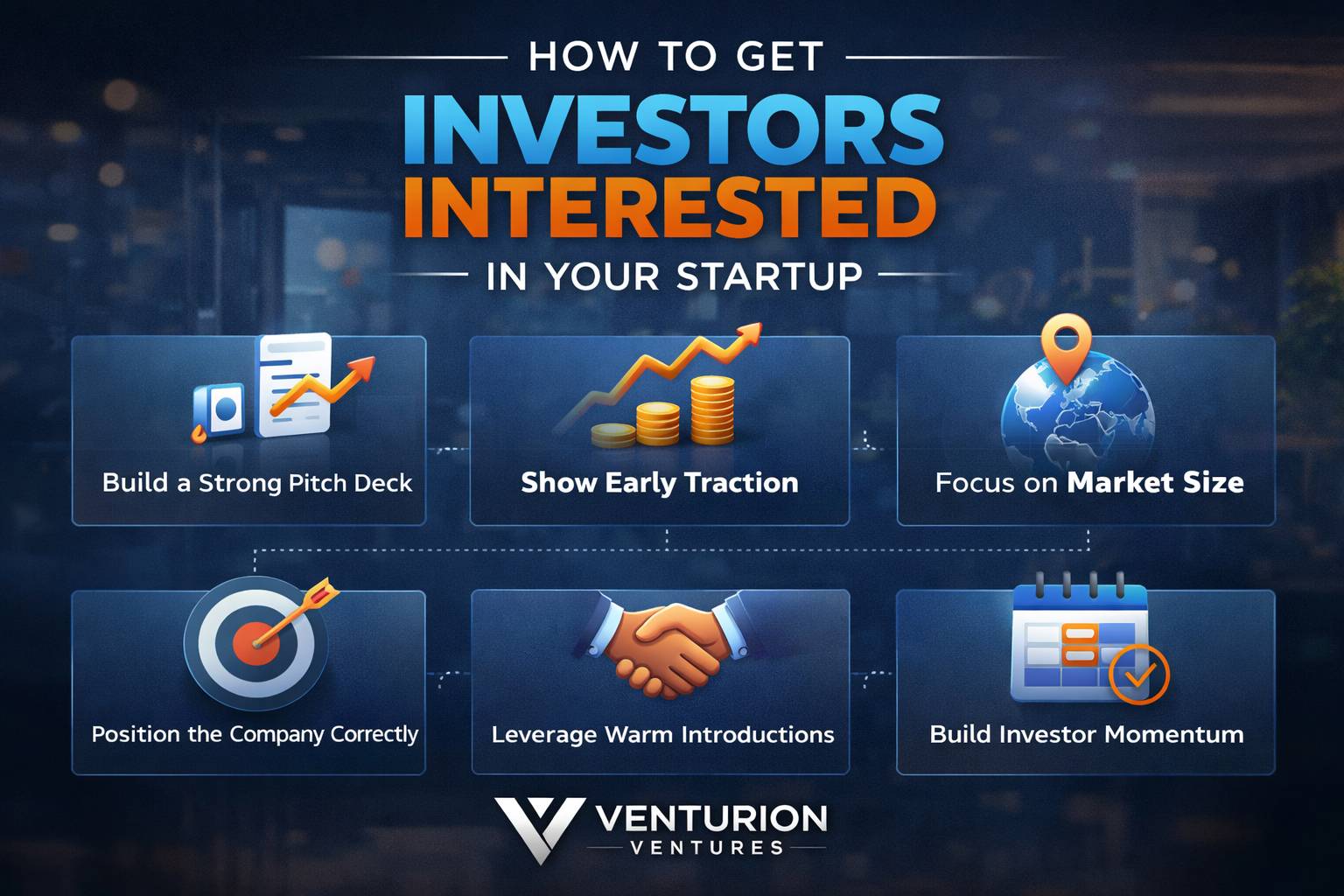
A practical guide explaining how startups can generate investor interest through clear positioning, strong pitch decks, market opportunity, and early traction.


-2-2.webp)
.webp)












.svg)

.svg)


