


-2-2.webp)
.webp)


Airbnb Pitch Deck Breakdown
The Airbnb pitch deck is one of the most famous startup presentations ever created. Here’s a breakdown of the slides that helped the company raise its first funding.
Before Airbnb became a global company worth billions, it was a simple idea: helping people rent out spare rooms to travelers.
When the founders first approached investors, they needed a clear way to explain the opportunity. Their pitch deck became one of the most widely shared startup presentations because it communicated the idea simply and effectively.
Even today, many founders study the Airbnb pitch deck when preparing investor presentations.
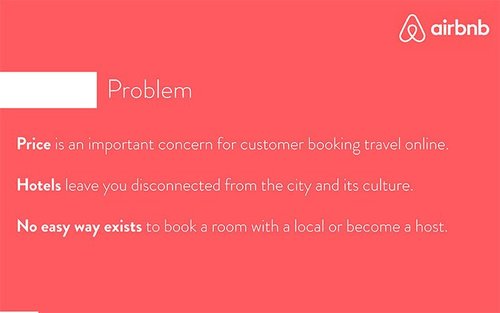
The deck opened with a clear problem:
Travelers often struggle to find affordable places to stay, especially during major events or in expensive cities.
By starting with a relatable problem, the founders immediately gave investors context for the opportunity.
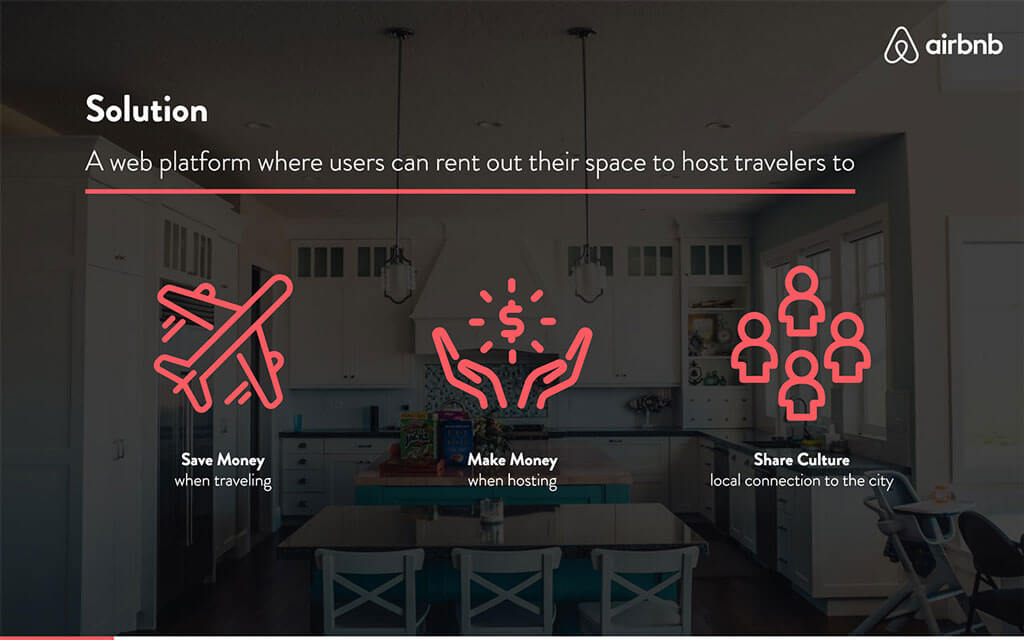
The solution was presented simply:
A platform where people can rent out their spare rooms to travelers.
This explanation was easy to understand and immediately communicated the value proposition.
The deck highlighted the large potential market.
Instead of focusing only on vacation rentals, Airbnb positioned itself within the broader travel and hospitality industry, which represents a massive global opportunity.
Investors look for companies with the potential to scale significantly, and this slide helped demonstrate that.
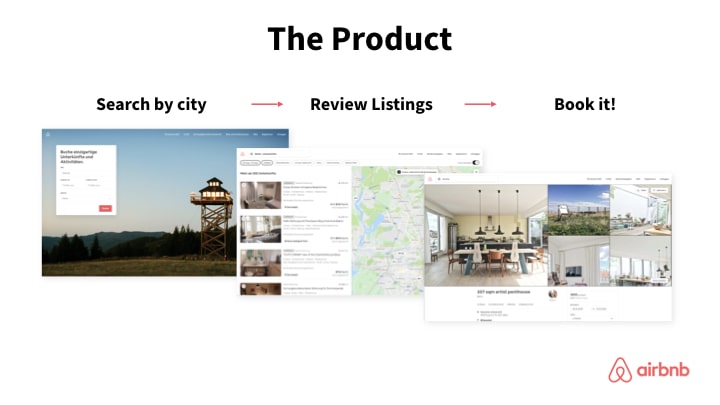
Airbnb showed how the platform worked.
Screenshots and simple visuals helped investors quickly understand the user experience.
Clear product visuals make it easier for investors to imagine how customers interact with the service.
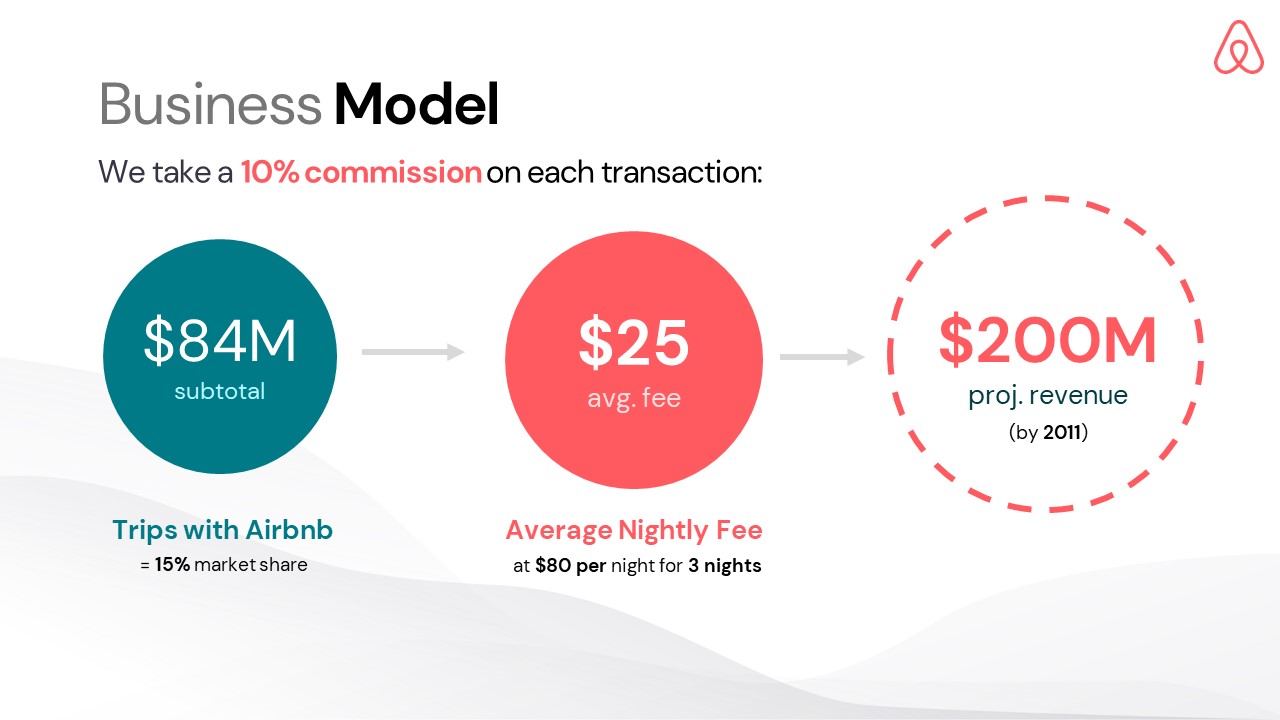
The founders explained how the company would make money.
Airbnb generates revenue by charging a service fee on bookings.
This model scales naturally as more listings and users join the platform.
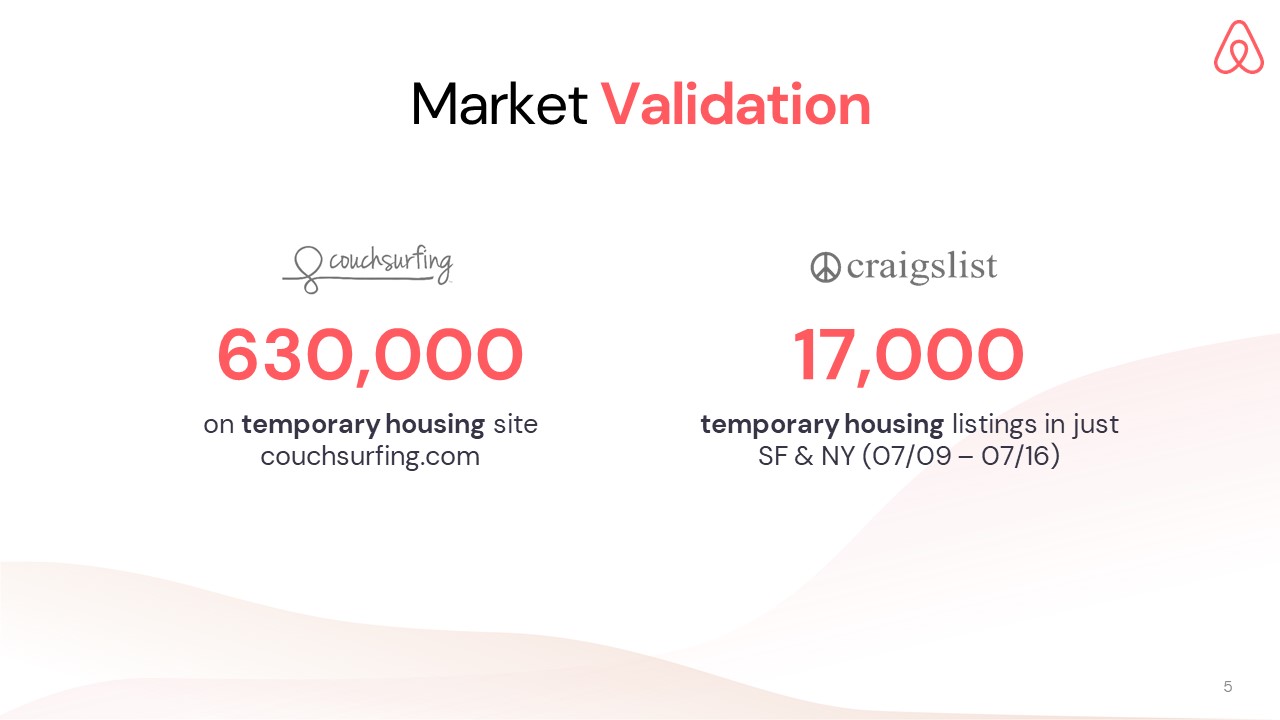
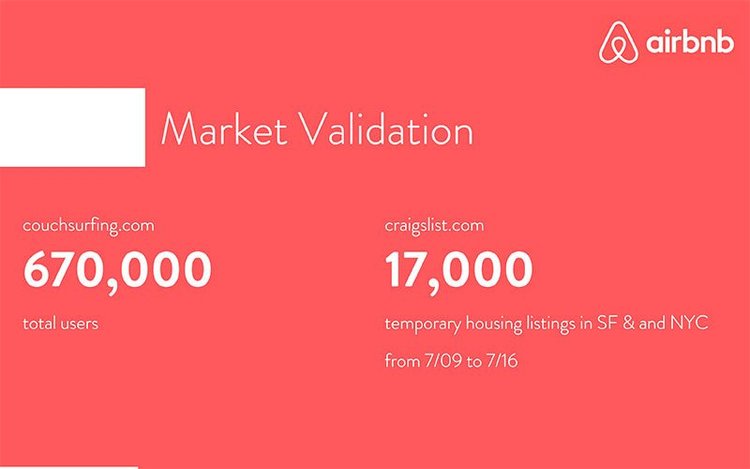
The deck included early indicators of traction and validation.
Evidence that customers were already interested in the product helped reduce investor risk.
Even small early signals can make a big difference when pitching investors.
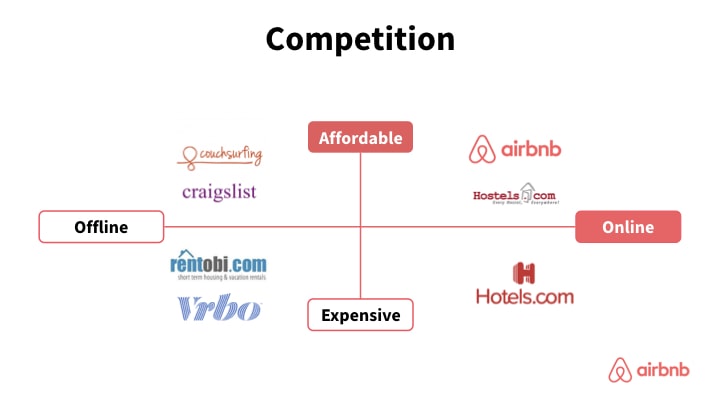
Airbnb addressed existing alternatives such as hotels and classified listings.
Rather than claiming there was no competition, the deck showed how the platform created a new category of travel accommodation.
This helped position Airbnb as a unique solution.
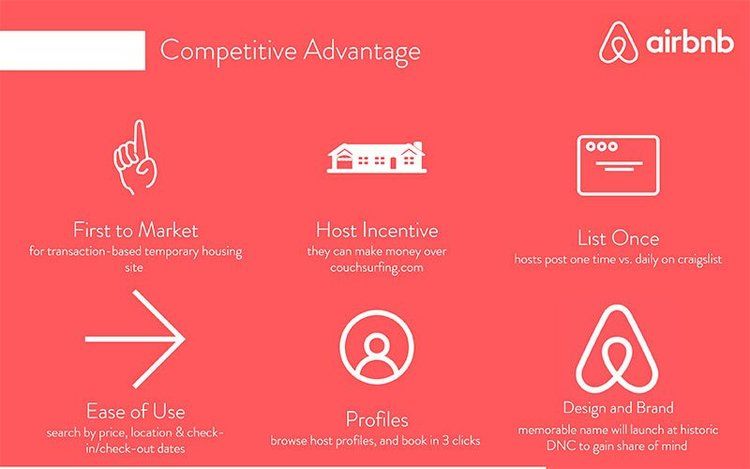
The founders explained why their platform could win.
Network effects, brand trust, and marketplace growth potential were key advantages.
These elements are important for venture-scale companies.

Investors want to know who is building the company.
The Airbnb founders highlighted their backgrounds and why they were capable of executing the vision.
Strong teams often make the difference between ideas that succeed and those that fail.
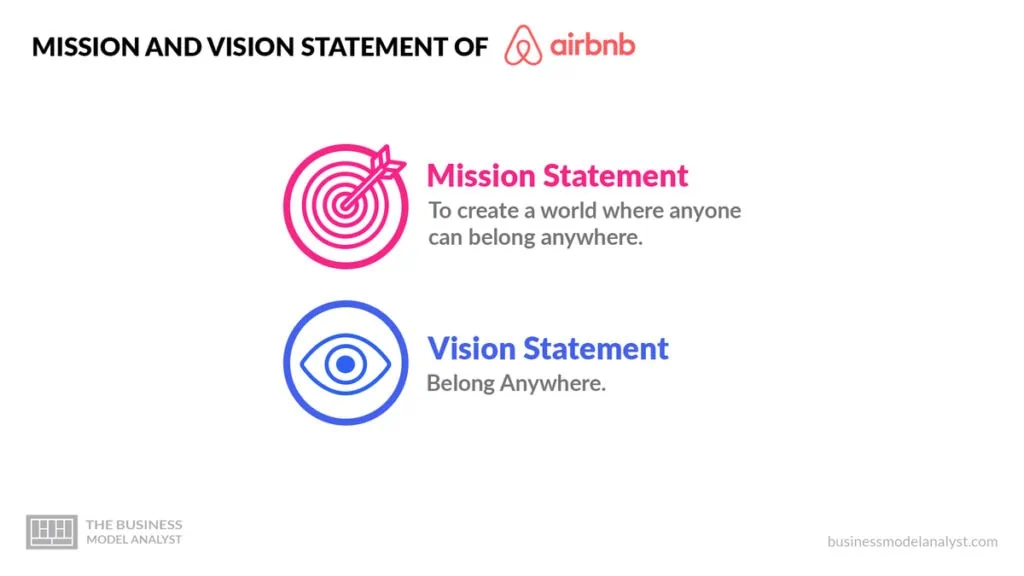
Finally, the deck communicated the broader vision for the company.
Airbnb was not just about renting spare rooms — it was about transforming how people experience travel and hospitality.
Big visions help investors see long-term potential.
Several key lessons emerge from this presentation:
Keep slides simple
Each slide should communicate one clear idea.
Tell a compelling story
Start with the problem, then guide investors through the solution and opportunity.
Highlight the market opportunity
Large markets attract venture capital investment.
Show early validation
Even small traction signals can strengthen a pitch.
The Airbnb pitch deck remains one of the most influential startup presentations ever created.
While every startup is different, the structure and clarity of this deck offer valuable lessons for founders preparing to raise capital.
Studying successful pitch decks can help entrepreneurs craft stronger investor narratives and communicate their opportunities more effectively.
Founders building their own investor presentations can also review our guide on How to Build a Pitch Deck or download our [Startup Pitch Deck Template] to develop a clear structure before fundraising.
.png)

Featured
The cost of a pitch deck can vary widely depending on whether you build it yourself or work with professionals. Here’s what founders should expect.
.png)
.png)
Featured
A good pitch deck is not just about design. It is about clarity, structure, and communicating a compelling investment opportunity.
.png)
.png)
Featured
Founders often wonder how long a pitch deck should be, but the real answer depends on how clearly the story is communicated.
.png)
.png)
Featured
Founders often wonder whether they need a pitch deck or a full business plan. The answer depends on what investors are actually looking for.
.png)
.png)
Featured
After you send your pitch deck, investors evaluate it quickly to decide whether your startup is worth a meeting. Here’s what they actually look for.
.png)
This process can be tough. But don’t worry, we’ve written a little something to help guide you through it. Learn more and take advantage of a limited-time offer with 50% off.
.svg)
Discover Insider VC Secrets

.svg)


