Best Startup Pitch Decks Ever (With Examples)

Discover the most successful startup pitch decks ever made, learn what worked, and get insights you can apply to your own investor presentations.

Read

Best Startup Pitch Decks Ever (With Examples)

TL;DR – Best Startup Pitch Decks Ever

  • Shows real pitch deck examples from successful startups.
  • Highlights slides, storytelling, and design elements that worked.
  • Includes companies like Airbnb, Uber, Facebook, and Stripe.
  • Demonstrates investor expectations and effective strategies.
  • Provides actionable insights for founders building their own decks.

Why Study the Best Pitch Decks?

Analyzing successful pitch decks helps founders understand what investors respond to.
Patterns emerge in storytelling, slide order, visuals, and clarity. By learning from companies that raised millions, you can avoid common mistakes and structure your deck for success.

Famous Startup Pitch Deck Examples

Why the Airbnb pitch deck has over million views, and everyone wants to  copy?

Airbnb

  • Focused on the problem of finding affordable short-term lodging.
  • Solution clearly communicated with visuals and simple metrics.
  • Included market size, traction, and clear next steps.

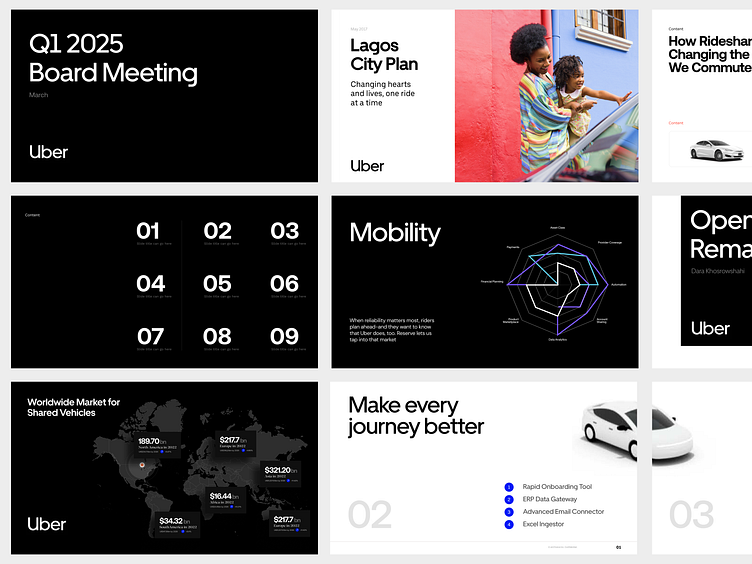
Uber Custom Presentation Template by Ayo for Pitch & Slide on Dribbble

Uber

  • Concise deck highlighting the market opportunity for ride-sharing.
  • Demonstrated early traction and scalability.
  • Clear, easy-to-follow slide order.
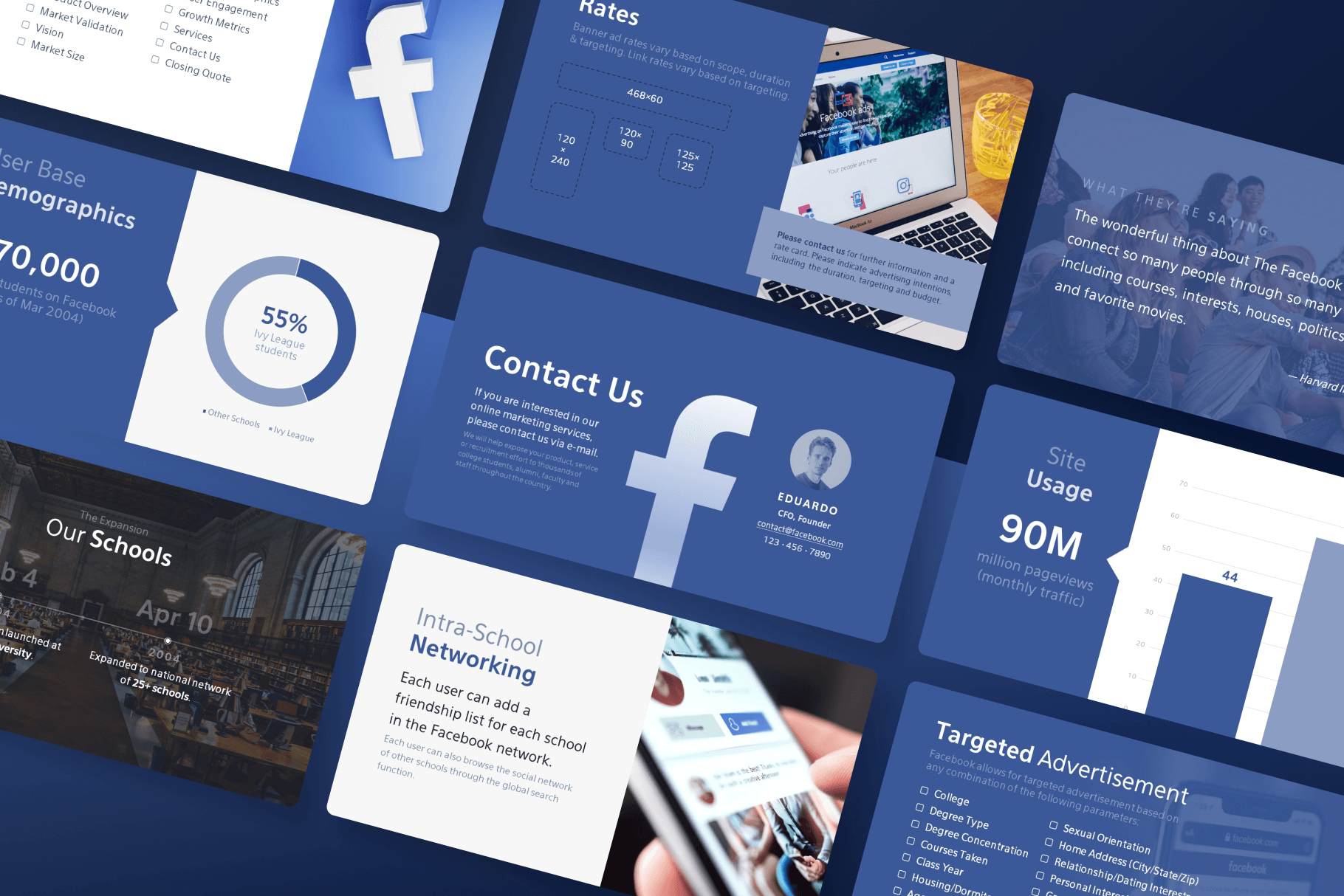
Facebook Pitch Deck Template – VIP Graphics

Facebook

  • Emphasized growth potential and unique value proposition.
  • Showed user adoption metrics and network effects.
  • Structured to tell a compelling story to investors.

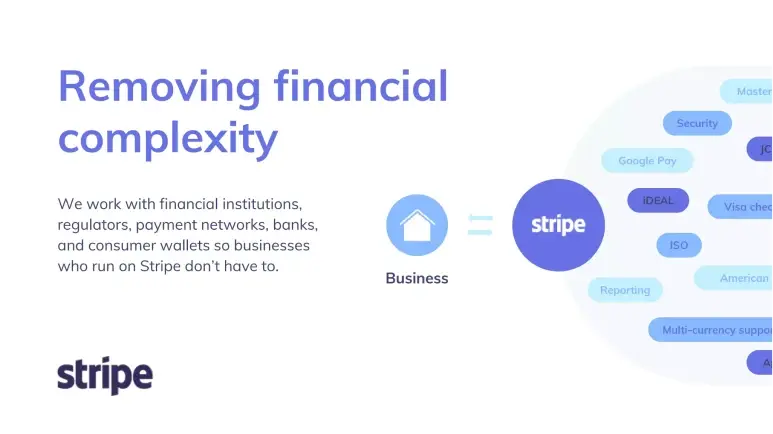
Stripe Pitch Deck That Raised $4.5B (Detailed Slide Breakdown) - Upmetrics

Stripe

  • Highlighted problem and solution early.
  • Clearly defined market and competitive advantage.
  • Showed trust-building elements like founders’ credibility and roadmap.

What Makes These Decks Effective

  • Clarity – Each slide communicates one key idea.
  • Storytelling – Narrative flows naturally from problem to solution to market.
  • Visual simplicity – Data is easy to read; slides are not overcrowded.
  • Traction & validation – Evidence that the idea works, even early on.
  • Investor-focused – Answers the main questions investors ask: Is the market big enough? Can the team execute?

How to Apply These Lessons to Your Own Deck

  1. Focus on clarity – don’t overcomplicate slides.
  2. Tell a compelling story – guide investors through the problem, solution, and opportunity.
  3. Highlight traction early – metrics, early users, or partnerships.
  4. Keep visual design clean – easy to scan and digest.
  5. Include the ask and next steps clearly.

Next Steps for Founders

Use these examples as inspiration but avoid copying slides word-for-word.
Combine the lessons learned with your own story using our How to Build a Pitch Deck guide to craft a deck that’s uniquely yours.

If you want professional guidance refining your story and deck, the team at Venturion helps founders prepare investor-ready materials for fundraising.

How to Build a Pitch Deck That Actually Gets Meetings

Featured

How to Build a Pitch Deck That Actually Gets Meetings

Build a pitch deck that gets real VC meetings. Learn what investors hate, what they want, and how to structure a story that moves them to act.

Read

How to Build a Pitch Deck That Actually Gets Meetings
Picking the Right Legal Structure

Featured

Picking the Right Legal Structure

This article outlines how startup founders can choose the right legal structure to raise capital, protect IP, and streamline investor due diligence.

Read

Picking the Right Legal Structure
Managing Your Cap Table

Featured

Managing Your Cap Table

This article helps startup founders understand cap table strategy — from ownership structure and dilution to tools and investor expectations.

Read

Managing Your Cap Table
Navigating VC Due Diligence

Featured

Navigating VC Due Diligence

This article helps founders understand and prepare for venture capital due diligence — from data room best practices to investor expectations.

Read

Navigating VC Due Diligence
Framing the Ask

Featured

Framing the Ask

Learn how to confidently present your fundraising ask, including how much you need, what it funds, and how it sets up your next raise.

Read

Framing the Ask